
1. Technical standards for printing paper
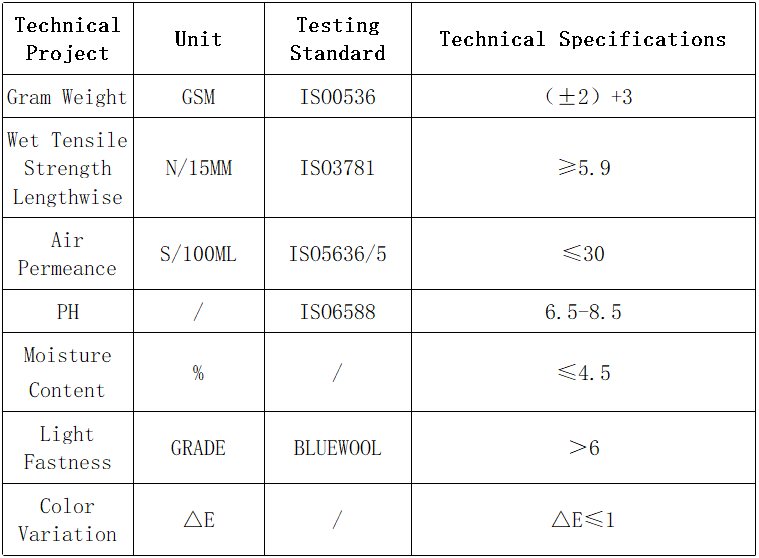
2. Technical standards for impregnated paper
Specifications and Dimensions
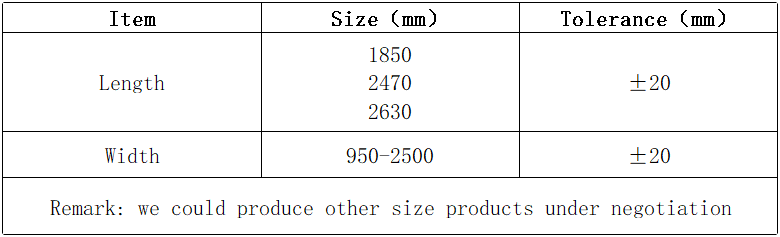
Physical Specification
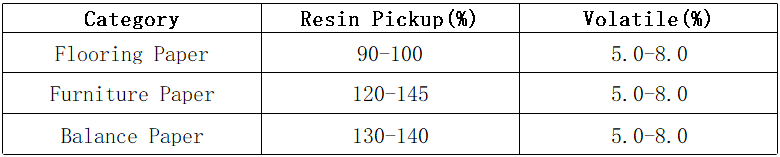
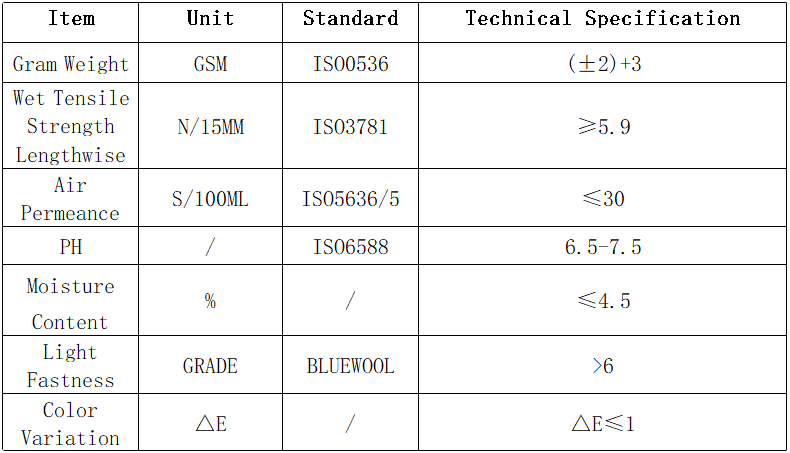
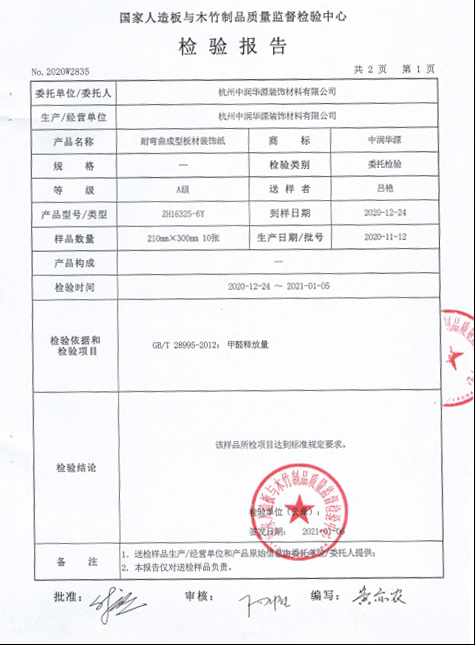
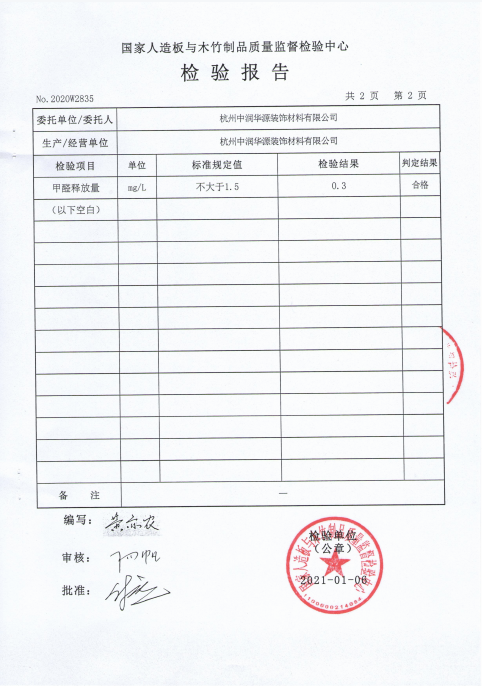
3.Inspection Report
4.Common problems with impregnated paper
Common problems and solutions during the pressing process of impregnated adhesive film paper
Characteristics of resin:
1.Mixed resin: Reduce the tension between the substrate and the impregnated paper during hot pressing, alleviating the tendency to crack and bend.
2. Urea formaldehyde resin: Opacity, increases the covering power of impregnated paper after hot pressing.
3. Melamine resin: It has transparency, resistance to physical and chemical corrosion.
Problems generated after pressing:
1. Dried flowers: are white opaque flower spots that exist on the surface of the product. The reasons for this are:
a. Poor flowability of resin and insufficient impregnation amount
b. Defects in the substrate and cushion pad (uneven surface, loose cushion pad and cushion pad)
c. Hot pressing temperature too high
Solution: Reduce the hot pressing temperature, increase equipment pressure, and extend the pressing time; Check the surface sanding degree of the substrate, and whether the pad and buffer pad are loose.
2. Wet flower: also known as water mark, is a misty mark on the surface of a product.
a. Short hot pressing time and low temperature
b. Low pre solidification degree
c. High moisture content of substrate
Solution: Extend the pressing time, increase the hot pressing temperature, and check if the impregnated paper is too damp; The storage environment for the substrate must be dry and the humidity should not be too high.
3. Bottom penetration: Due to insufficient coverage ability of decorative paper adhesive film, the substrate shows defects on the layout.
a. Poor substrate quality
b. Small amount of glue
c. The weight of the printing base paper is not enough, and the gray powder content is not sufficient
Solution: Adjust the content of urea formaldehyde resin (increase), increase the weight of the base paper, and choose a reasonable substrate.
4. Cracking: manifested as irregular cracks on the surface of the board.
a. The resin takes too long during the hot pressing process, causing excessive curing of the adhesive
b. The degree of expansion and contraction of the surface layer substrate varies
c. Pure melamine glue is prone to cracking
Solution: The substrate must be stored in a dry environment. The humidity should not be too high, and the hot pressing cycle should not be too long. (Mainly due to poor delamination of melamine, which can easily cause cracking)
5. Bubbling: An abnormal protrusion caused by the presence of gas on the surface of a product.
a. The moisture content of the substrate is too high
b. High volatile matter (paper too trendy)
c. The hot pressing time is too long
Solution: Increase the temperature appropriately and shorten the hot pressing time. (Thin plates are prone to bubble problems)
6. Not resistant to pollution
a. The paper is too damp (low pre curing degree), and the glue content is not enough
b. The substrate has a high moisture content
c. Short hot pressing time, low temperature, steel plate too deep
Solution: The storage environment for the substrate must be dry and the humidity should not be too high; Appropriately increase the amount of adhesive and extend the pressing time. According to the depth of the steel plate, increase the pressure on the equipment.
7. Bright stripes
a. Low pre solidification degree
b. The substrate has a high moisture content
c. Short hot pressing time and low temperature
Solution: Check if the paper is too damp and ensure that the substrate is stored in a dry environment; Extend the hot pressing time and increase the hot pressing temperature.
8. White stripes
a. High pre solidification degree and short curing time
b. Uneven application of glue, excessive amount of urea formaldehyde glue
c. The hot pressing cycle is too short and the temperature is too high
Solution: Reduce the temperature and extend the pressing time; After half an hour of opening the paper, start pressing it (to let the impregnated paper regain some moisture). Plain paper and double-sided presses are prone to such problems, especially with the lower steel plate and the position of the oil inlet and outlet.